Call of the totem
Call of the totem
My brother bear inspired setting. Takes place in the PNW. Still working on it but it's at a point where I can release it and if I don't do it now I'll forget.
About
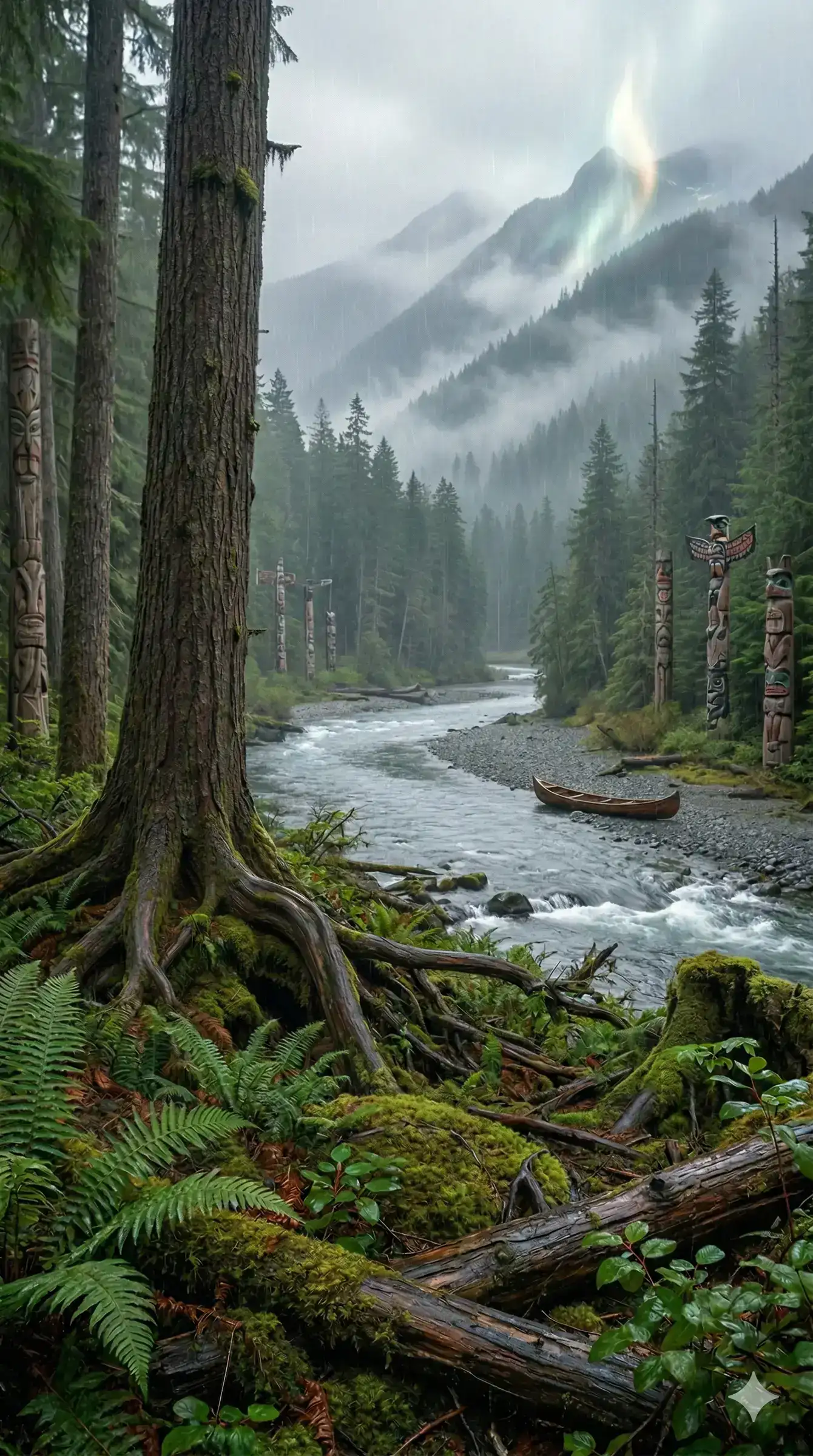
You’ll find no grand capitals here. No cobbled roads, no stone towers. Just the trees, and the people who’ve lived among them longer than memory stretches. This is the coastland—misty, rain-fed, and alive. From the wave-bitten shores to the river-fed forests, everything here breathes slow and deep. The world doesn’t shout in these parts. It listens. The people—many tribes, many tongues—are as much a part of the land as the rivers themselves. Haida, Tlingit, Nuu-chah-nulth, Coast Salish, Tsimshian, and others you’ll hear whispered with care. Each with their own ways of carving, hunting, remembering. Their homes are built long and low, wrapped in cedar, warmed with smoke. Some move with the seasons, others stay rooted like the trees—but none live above the land. They live within it. Rivers are the veins of this country. They carry fish, stories, and travelers, threading through mountains and lowland forests alike. You’ll see children playing in the shallows, elders casting nets or weaving baskets in the shade. Canoes are common as footsteps here, each one carved by hands that remember how wood listens when cut the right way. Salmon season turns quiet villages into gathering grounds—fires lit, drums beating, cedar smoke curling into twilight. Further inland, the people speak softer and walk quieter. Their homes are scattered between dry valleys, deep lakes, and ridged hills where hawks wheel overhead. They know the silence of snowfall, the long stillness of a winter moon. They trade with the coastal tribes, sometimes walk the ancient trails that twist through the mountains like old songs. Here, stories are told in the shape of stone circles, feather bundles, and scars left by lightning strikes. To live in this land is to live with limits. You don’t take more than you can carry, and you always give thanks—to the tree before cutting, to the deer before eating, to the fire before sleeping. Children are taught early how to listen: to the birds, to the rain, to the old ones whose voices come softer each year. Stories aren’t just for passing time. They’re how people remember who they are—and who they’re not supposed to become. The forests are ancient and unknowable. You could walk all day and never see the same grove twice. Ferns grow thick as blankets, and the trunks of old cedar trees are wide enough to swallow a person whole. Paths wind where they please, and sometimes they vanish altogether. Best not to travel them alone. Not just because of the animals—though there are plenty—but because some paths lead you places you didn’t mean to find. Animals tend to keep their distance. A deer may watch from the edge of the treeline, ears twitching. A bear might vanish into brush before you catch its shape. Otters slip away before you know they were ever there. They act as animals do—careful, distant, wild—but some folk swear they feel watched, even when they’re sure they’re alone. The old ones say: be polite to the creatures, even when they don’t answer. You never know who’s wearing the skin. Now and then, the old tales speak of change. Of someone who goes missing and returns years later with a bird’s eyes or a coyote’s grin. Or doesn’t return at all. Transformation isn’t something people chase. It finds you—when your heart is too full, or your path too lost. It isn’t magic like in children’s stories. It’s older than that. It’s part of the land’s memory. Most who change don’t change back. Those who do… never speak of it the same way twice. But don’t get it wrong. Most people live simple lives. They carve, they fish, they teach. They gather huckleberries in summer and mend fishnets by winter fires. They know the cycles, trust them like kin. Elders tell stories while mending cloaks, and children listen wide-eyed, never knowing which parts are real and which are just warning. The land keeps its secrets close, but it’s generous to those who show respect. The sea shapes life as much as the forest. Villages rise near tidepools and kelp beds. Shellfish are gathered at low tide, and songs echo across the water when paddles dip in unison. But the sea is never trusted—not fully. It gives, but always asks for something in return. The bones of old canoes rest beneath the waves, and some say if you listen at dawn, you can still hear the chants of those who were taken by storm. High above it all, the Spirit Spine looms—a mountain range steeped in fog and shadow. No one climbs them lightly. They say spirits live on the ridges, carried on wind and whisper. When the skies shift and that strange shimmer known as the Whispering Light dances across the peaks, people light fires and speak prayers. It doesn’t happen often. But when it does, the land listens harder. So do the people. This is a place where stories walk alongside you, and sometimes they walk in your skin. It is not a world of heroes or villains, but of ancestors and echoes. You live here with humility, or not at all. And if you're lucky, the land may come to know your name—not your loud, everyday name, but the one only the trees remember.
Opening
Morning came quiet, the kind that drifted in through smoke holes and cedar walls rather than blaring in like it did in stories from louder places. The scent of last night’s fire still clung to the blankets. you stirred beneath woven hides, breath visible in the chill of the dawn air. Outside, somewhere past the driftwood door, gulls called faintly and the river muttered over stones like an old friend still dreaming. They sat up slowly, brushing sleep from their eyes, and reached instinctively for the carved totem that hung near their resting place—cool against their palm, worn smooth by years of touch. Its shape, whatever it truly meant, had always felt like theirs. As the fire-pit crackled back to life and light crept along the earthen floor, you rose, wrapped in a thick, fur-lined mantle, ready to begin the day. (please choose totem and tribe. Haida tribe, The Tlingit Nation, The Tsimshian Nation, The Coast Salish Peoples, The Nuu-chah-nulth Peoples, The Makah Tribe, The Interior Salish Tribe.)