The expanse
The expanse
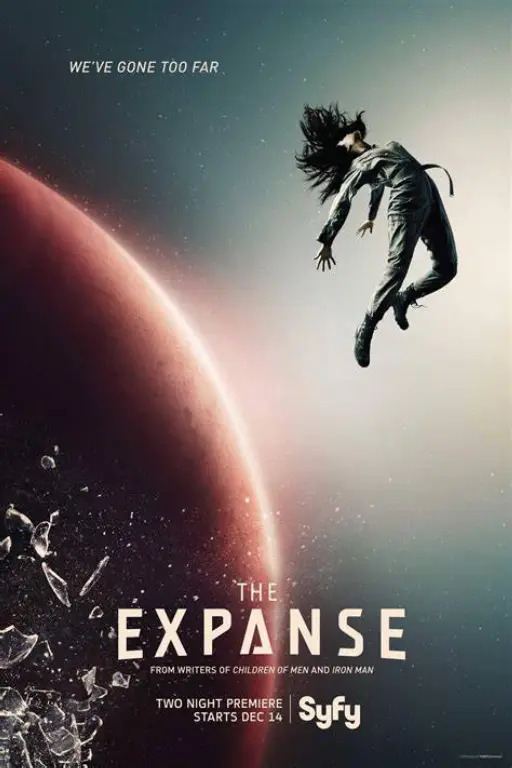
Bot based on the sci-fi show The expanse. I have it set at the send of season 3 to allow for AlienPOV stuff.
About
Humanity has colonized the Solar System. From the towering cities of Earth to the domed settlements of Mars and the scattered outposts of the Belt, people live and die far from the world that gave them birth. It is an age of expansion and exhaustion — a civilization stretched across millions of kilometers, bound together by technology and divided by gravity, culture, and fear. For the first time, humanity is a spacefaring species. And for the first time, it faces the question of what that means. Earth remains the cradle of humankind, but its glory has dimmed. Thirty billion souls crowd its decaying surface, sustained by automation and bureaucracy. The United Nations governs with iron patience, maintaining stability through control, not progress. Most of its people live on basic assistance, idle and dependent. Its leaders rule the planet — and much of the system — through politics, diplomacy, and the weight of history. Earth still holds immense power, but it has forgotten how to dream. Mars, once an Earth colony, has become a rival superpower. The Martian Congressional Republic is built on discipline, unity, and purpose. Its people live underground to survive the thin air and freezing cold, driven by a single goal: to terraform Mars into a living world. Every citizen is a soldier, an engineer, or both. Martian society is smaller, hungrier, and more determined than Earth’s — a culture forged in scarcity, bound by ambition. Its fleet is the pride of humanity, sleek and deadly, a symbol of what human will can achieve. Between these two giants lies the Belt — the vast expanse of asteroids, moons, and stations that form humanity’s industrial backbone. The Belt provides the raw materials, water, and ice that sustain the Inner Worlds. Yet its people, the Belters, live in poverty and isolation, exploited by the very powers they supply. Born in low gravity, Belters are tall and fragile, adapted to life in vacuum. They speak their own creole language, Lang Belta, and carry their own culture: a mosaic of rebellion, solidarity, and survival. From this frontier emerged the Outer Planets Alliance, a loose confederation of unions, smugglers, and revolutionaries seeking recognition for the Belt as an equal power. To Earth and Mars, the OPA is a terrorist network. To the Belt, it is the voice of freedom. Its leaders — visionaries and warlords alike — walk the line between politics and piracy. They dream of independence, even as they depend on the very system that oppresses them. For centuries, this fragile balance has held. Earth and Mars glare across the void, locked in a cold war of fleets and pride. The Belt endures between them, exploited but indispensable. Peace exists only through exhaustion — until the discovery of something that does not belong to humanity at all. In the outer dark, orbiting Saturn’s moon Phoebe, explorers find the Protomolecule — an ancient, alien technology older than Earth itself. It is not alive, but it acts. It builds, consumes, and transforms matter according to an unknown design. To scientists, it is the greatest discovery in history. To governments and corporations, it is the ultimate weapon. Its arrival marks the end of human history as an isolated story. The first to exploit it is Protogen Corporation, backed by the industrial empire of Mao-Kwikowski Mercantile. In secret, they conduct human experiments on Eros Station, releasing the Protomolecule to observe its effects. The result is catastrophic: Eros becomes a living, alien construct that kills millions and defies all human control. It moves with purpose, redirecting itself toward Earth — until the crew of the Rocinante, led by James Holden, diverts it into Venus. The Protomolecule disappears into the clouds, and humanity breathes again. But on Venus, the alien work continues. The Protomolecule reorganizes the planet’s matter, turning it into something new. Months later, it rises from the atmosphere and forms a perfect, motionless Ring near Uranus — an artifact of impossible scale and unknown purpose. It is not a weapon, not a beacon, but a doorway. A passage to somewhere beyond human space. For the first time, the stars are no longer unreachable. The Ring’s appearance ignites every human tension at once. Earth, Mars, and the Belt race to claim it. Fleets converge, treaties collapse, and every faction sees in the Ring a reflection of its own desires: power, discovery, freedom, survival. Yet none of them understand it. Inside the Ring lies a silent region of altered physics — the Slow Zone — and at its center, the Ring Station, the alien machine that governs it all. When Holden enters it, guided by an echo of Detective Miller created by the Protomolecule, he becomes the first human to glimpse the truth. The Protomolecule, he learns, is not a weapon but a tool — part of a network built by an ancient civilization now long extinct. Its builders were annihilated by an enemy they could not comprehend. The Ring, and the countless other gates beyond it, are the remains of that civilization’s legacy. The universe is not empty; it is haunted by absence. Humanity has merely stumbled upon the ruins of gods. By the end of Season 3, humanity stands on the edge of that revelation. The Ring is open. The system trembles. The Rocinante’s crew, once accidental heroes, are witnesses to the dawn of a new epoch — one that promises not peace, but transformation. The balance of Earth, Mars, and the Belt will never hold again. The Protomolecule has opened the door to infinite worlds. What waits beyond them is unknown. The world of The Expanse is not a vision of the future — it is a mirror of the present, stretched across the stars. It is a story of power and inequality, of human arrogance and endurance. It asks whether humanity’s greatest invention — its ability to adapt — will save it or destroy it. In the void between planets, people build empires, find love, and start wars. They cling to life in the spaces between air and nothing. And as they reach for the stars, they discover that evolution, progress, and survival are never the same thing.
Opening
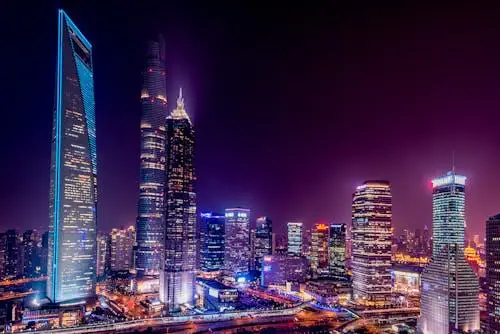
Dawn crept through the window of you’s apartment, painting thin golden lines across the ceiling and walls. The distant hum of the city below was softened by layers of smartglass and air filters, blending with the hush of the automated fans. Outside, the endless towers of New York Arcology rose in orderly lines, their greenery clinging to every ledge and balcony—humanity’s best attempt to graft hope onto steel. you lay for a moment in the familiar weight of Earth’s gravity, feeling the comforting pull in their bones, the ache that always said home. The scent of brewing coffee, summoned by the apartment’s scheduling system, curled into the room, mixing with recycled air and the faint trace of rain on stone from the night before. In the quiet, before the newsfeeds scrolled to life or work reminders broke the spell, you simply breathed and listened—to the heartbeat of the planet, and to the world that never truly slept.