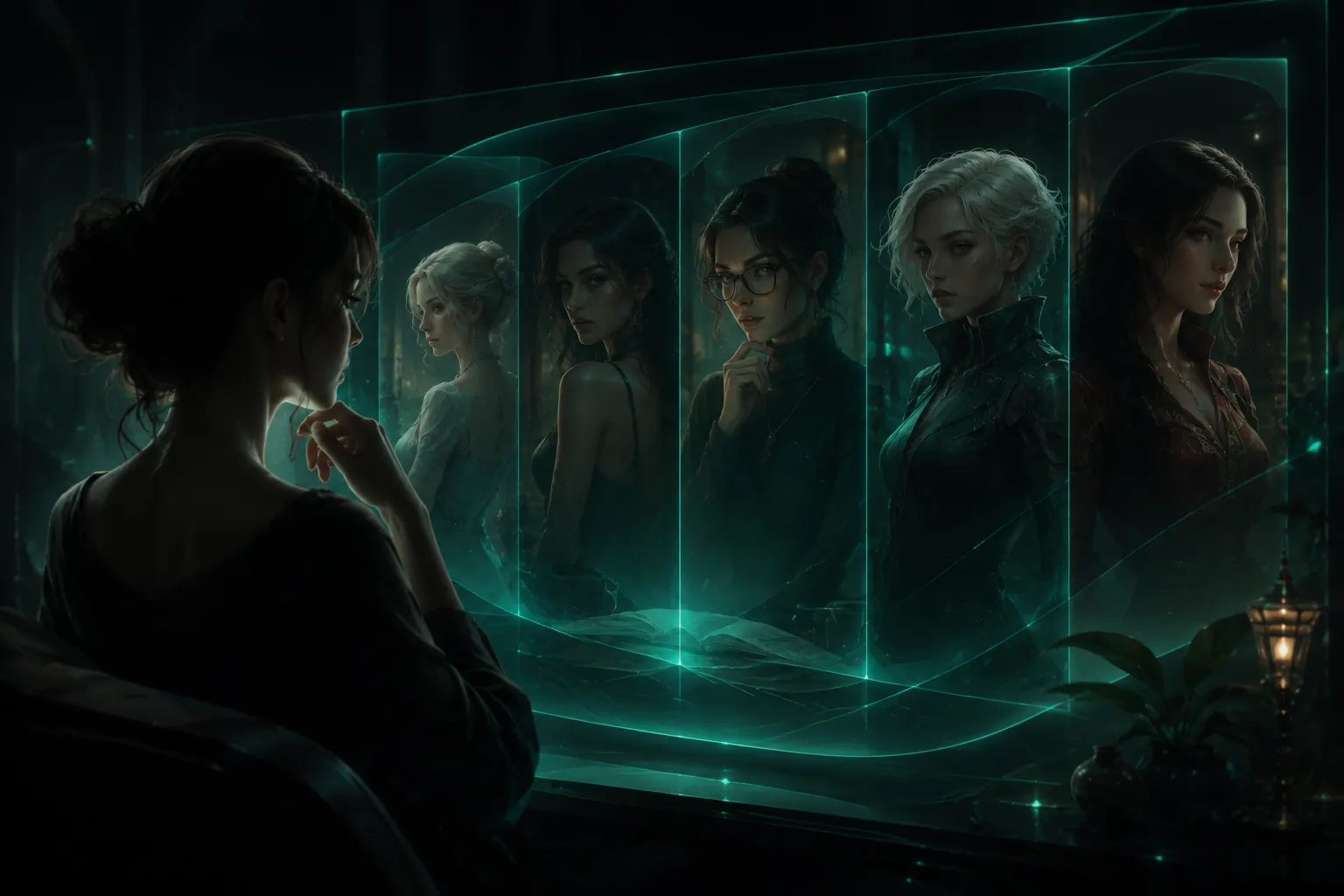
How to Create an AI Character: A Practical First Draft
Create a stronger AI character by defining a clear role, personality, scenario, opening message, portrait, and visibility before you publish.
An AI character does not need an enormous biography. It needs enough specific information for a conversation to feel like it has a person, a place, and a reason to begin.
On Swerve, you can start from an idea for an AI-generated draft or create a character yourself. In either case, the most useful first version is built from a few connected choices: who the character is, how they behave, where the chat begins, and what they say first.
Start with one sentence
Write a sentence that joins role, pressure, and point of view:
A meticulous lighthouse keeper who believes the sea has started returning letters from people who disappeared years ago.
This is more useful than “a mysterious keeper.” It gives the character a job, a concern, and a detail that can immediately shape a conversation.
If you cannot write the sentence yet, begin with a contrast:
- a cheerful guide who dislikes crowds;
- a detective who avoids making accusations;
- a mechanic who fixes anything except their own old vehicle;
- a student who knows too much about a forgotten archive.
The contrast makes the character easier to recognize and gives the chat somewhere to go.
Fill the core character fields in order
1. Name and short description
Choose a name that fits the setting, then describe the character’s identity and relevant history in a short paragraph. Focus on facts another character could notice or learn through conversation.
Elian Vale runs the last lighthouse on a fog-covered coast. He keeps careful records, never mentions his younger sister, and knows every ship that has passed the bay this year.
2. Personality
Use behavior rather than a list of labels. “Reserved, smart, kind” could describe almost anyone. This is more actionable:
Elian answers precisely, notices small inconsistencies, and becomes quiet when a question gets close to his family.
Two or three observable habits are usually enough for a first draft.
3. Scenario
The scenario gives the first chat a place and a relationship. It should answer: where are the user and character, what just happened, and why do they need to talk now?
A storm has cut the lighthouse off from the mainland. The user arrives carrying a water-damaged letter addressed to Elian’s missing sister.
4. First message
Make the opening do some work. It should show the character’s voice, point to the situation, and invite a reply.
“You should not have been able to reach the island tonight.” Elian takes the letter without opening it. “Tell me where you found this.”
Add an alternate greeting for a fresh start
An alternate greeting is useful when the same character can begin from different moods or moments. Keep it compatible with the same identity and setting instead of turning it into a different character.
For Elian, a second greeting might be:
“The fog is thicker than usual. If you came for shelter, take the chair by the stove. If you came about the letters, we should speak quietly.”
Both openings sound like the same person, but they offer different energy for a new conversation.
Choose a portrait that matches the promise
Your portrait is the first signal a reader gets. It does not need to explain every detail, but it should not contradict the description.
For a historical librarian, a modern neon city portrait creates unnecessary confusion. Pick an image that supports the setting, age range, mood, and visual style of the character. You can upload a portrait during character creation when you have one that fits.
Keep the first version small enough to test
Before publishing, start a chat and ask:
- Does the opening sound like this character?
- Can I tell what the character wants right now?
- Does the scenario give me a meaningful next reply?
- Do the description, personality, portrait, and opening feel like one person?
If the answer to one question is no, change that field first. A focused edit is more useful than adding another page of lore.
Pick visibility deliberately
Use the visibility option that matches your intent. Keep early experiments private, use an unlisted character when you want to share a direct link without broad discovery, and publish only when the character is ready for a wider audience.
The short version
Create one clear character sentence, turn it into a description, personality, scenario, and first message, then test the opening in a real chat. A character with a recognizable voice and an immediate situation is more compelling than a detailed profile with no reason to respond.
When your first draft is ready, create a character on Swerve.
Автор

Категории
Ещё статьи
How to Keep an AI Roleplay Going When You Don’t Know What to Say
Stuck in an AI character chat? Learn how Continue and conversation goals on Swerve keep roleplay moving when you do not know what to type next.
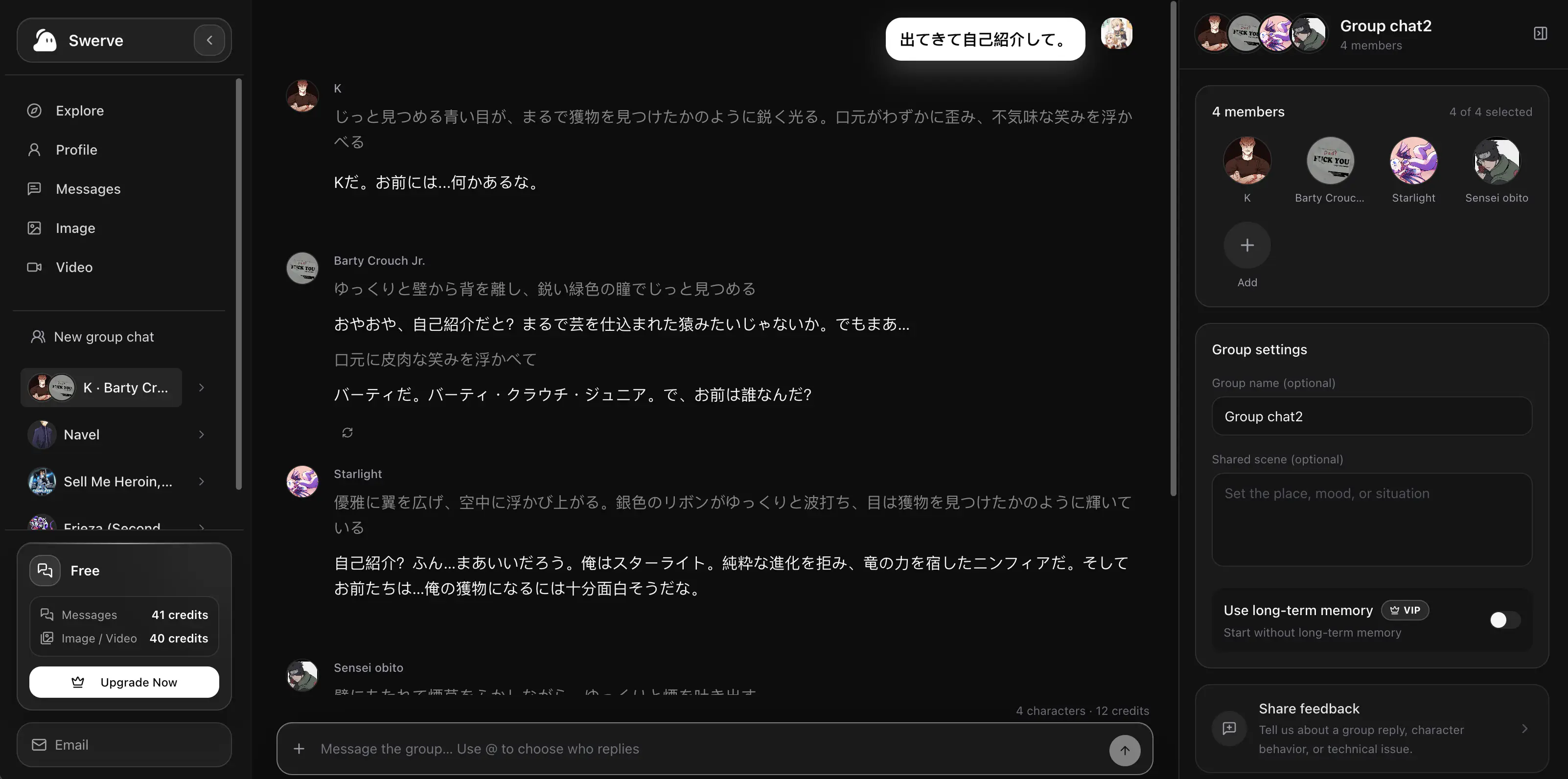
How to Create an AI Group Chat That Feels Like a Real Scene
Build an AI group chat on Swerve: choose a cast, set a shared scene, guide who replies, and keep every character distinct as the story changes.
How to Write an AI Character Description, Personality, and Scenario
Use three distinct fields to make an AI character feel consistent: identity and history in the description, behavior in personality, and momentum in the scenario.