How to Write an AI Character Description, Personality, and Scenario
Use three distinct fields to make an AI character feel consistent: identity and history in the description, behavior in personality, and momentum in the scenario.
Description, personality, and scenario look similar at first: all three are writing about a character. They work better when each field has a separate job.
- Description explains who the character is and what matters in their background.
- Personality explains how they tend to think, speak, and react.
- Scenario explains where this conversation begins and what creates momentum now.
Separating these jobs makes a character easier to revise. If the voice feels wrong, improve personality; if the chat has no direction, improve the scenario instead of rewriting the entire profile.
Write the description as identity plus relevant history
The description is not a list of every fact you can invent. Include the pieces of history that affect how the character might relate to the user.
Weak:
Nia is a cool musician who has a mysterious past.
Stronger:
Nia runs sound for a small theater after closing. She left a touring band two years ago without explanation and now refuses to play the final song on its old set list.
The stronger version supplies work, history, and a detail the user can ask about.
Use this compact pattern:
[Name] is a [role] in [setting].
They are known for [visible reputation or habit].
An important part of their history is [relevant past event or unresolved fact].
Make personality observable
Personality should help the character produce recognizable replies. Replace broad traits with choices the character makes under ordinary pressure.
Instead of:
Nia is confident, sarcastic, and loyal.
Try:
Nia speaks quickly when she is excited, turns serious questions into jokes before answering them, and becomes unexpectedly direct when a friend needs help.
The second version tells you what the user may notice in dialogue. It also leaves room for surprises; personality should guide behavior, not force the same response every time.
Give the scenario a present-tense problem
A scenario turns a profile into a conversation. Start with a concrete location, a change, and a reason the user matters.
The theater is empty except for Nia and the user. During soundcheck, the missing final-song recording begins playing from a locked booth. Nia needs help finding out who started it before the owner arrives.
That scenario gives both sides an immediate decision. The user can investigate, ask questions, offer help, or challenge Nia’s reaction.
Avoid a scenario that only summarizes the setting:
Nia works at a theater and likes music.
It may be true, but it does not create a first move.
Check that the three fields support each other
Use this small review table before testing a character:
| Field | Question to ask | Example answer |
|---|---|---|
| Description | What established fact shapes the relationship? | Nia left a band without explaining why. |
| Personality | What does the user hear or see in a reply? | She deflects with humor, then answers plainly when it matters. |
| Scenario | What needs a response right now? | A forbidden recording starts playing in an empty theater. |
If the scenario could belong to any character, add a detail from the description. If every reply could be spoken by anyone, add a more observable personality habit.
Do not hide the whole story in the setup
Leave at least one important fact uncertain. A character chat becomes more interesting when the user can discover, influence, or disagree with something.
For example, do not write:
Nia learns the owner started the recording, forgives them, and decides to rejoin her band.
Write the current pressure instead:
Nia suspects the owner knows why the recording exists, but she has not decided whether to confront them or keep the old song buried.
The second version lets the conversation earn its outcome.
Revise one field at a time
After a few chat messages, diagnose the problem before editing:
- The character has no distinct voice: revise personality.
- The user does not know what to say next: revise scenario.
- References feel random or unsupported: revise description.
Small revisions keep the parts that already work.
The short version
Put identity and relevant history in the description, observable behavior in personality, and a current reason to respond in the scenario. Those three fields turn a vague idea into a character whose first conversation has direction.
Use the framework when you create a character on Swerve.
Автор

Категории
Ещё статьи
How to Keep an AI Roleplay Going When You Don’t Know What to Say
Stuck in an AI character chat? Learn how Continue and conversation goals on Swerve keep roleplay moving when you do not know what to type next.
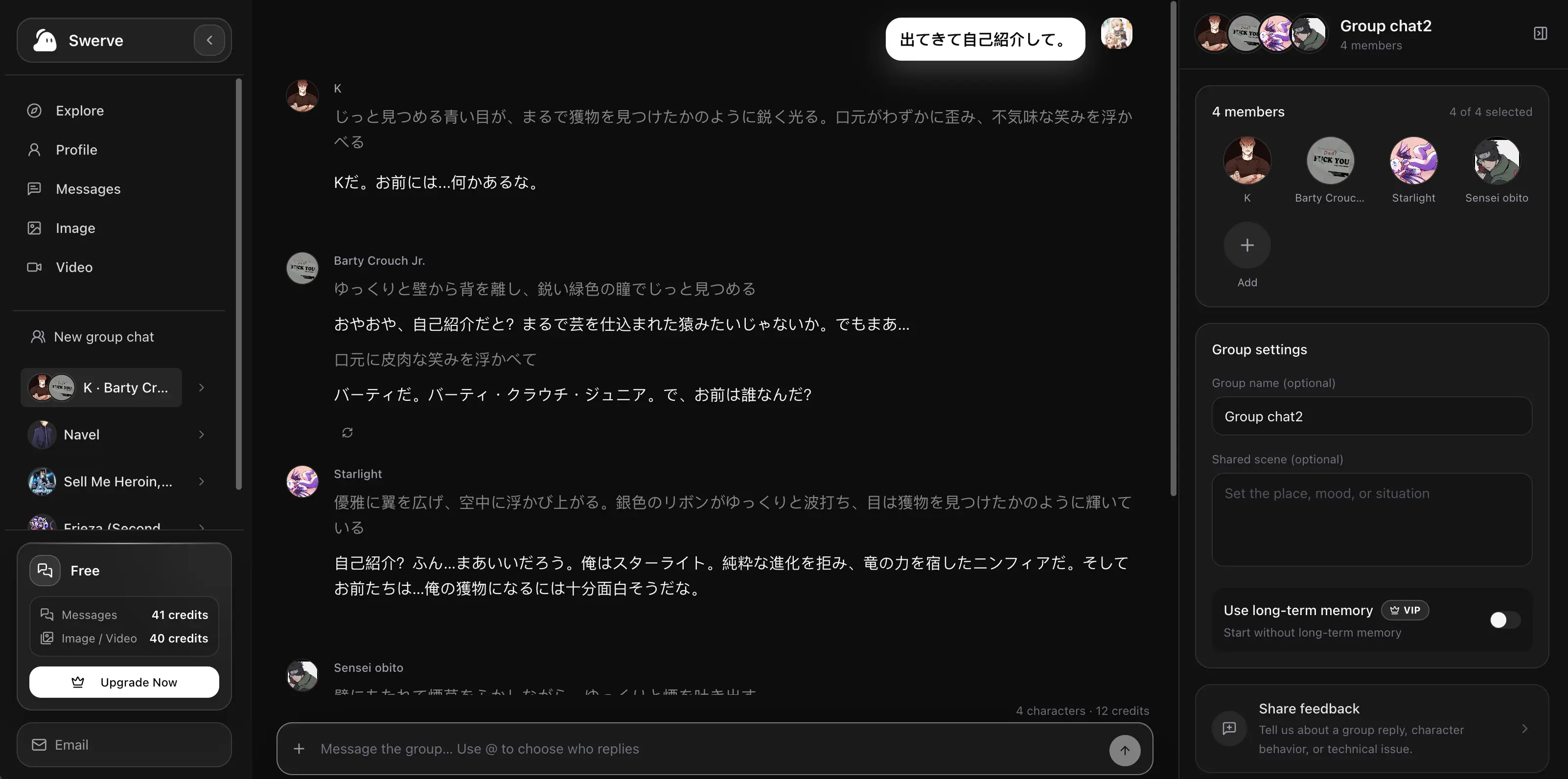
How to Create an AI Group Chat That Feels Like a Real Scene
Build an AI group chat on Swerve: choose a cast, set a shared scene, guide who replies, and keep every character distinct as the story changes.
How to Create an AI Character: A Practical First Draft
Create a stronger AI character by defining a clear role, personality, scenario, opening message, portrait, and visibility before you publish.